You don’t really think about your basement floor until a spring storm blows through, the sump pump kicks on nonstop, and you’re suddenly wondering what would happen if it failed. Around here, basements double as family rooms, guest suites, and storm shelter — but they’re also where moisture, cold concrete, and temperature swings are toughest on flooring.
Choosing wisely means you get a cozy, finished space without worrying every time it rains.
Start with the Real Moisture Risks in Nebraska Basements
Below-grade spaces sit right against cool concrete and damp soil. In our climate, that means:
- Spring snowmelt and heavy thunderstorms can push moisture vapor — or even liquid water — through foundation walls and slabs.
- Humid summers raise the relative humidity in basements, while winter heat dries the upstairs air and pulls moisture out of materials.
- Older homes in areas around Lincoln may have minor seepage or condensation even if they’ve never “flooded.”
Any basement floor you choose has to tolerate occasional dampness and ongoing humidity, not just normal household spills. That’s why traditional solid hardwood is almost never recommended below grade, and why carpet needs to be used strategically.
Before you think about looks, make sure you’ve addressed obvious issues: working sump pump, downspouts routed away from the house, and any cracks or leaks evaluated. Flooring is your last line of defense, not your only one.
Best All-Around Choice: Waterproof Luxury Vinyl Plank or Tile
For most Nebraska basements, waterproof luxury vinyl is the sweet spot between comfort, durability, and peace of mind. These planks and tiles are:
- Fully waterproof from the top down
- Stable over concrete slabs through seasonal temperature swings
- Softer and warmer underfoot than bare tile
Wood-look styles from brands like Hallmark and Johnson Hardwood give you the warmth of oak or maple without worrying about swelling if a dehumidifier fails. You can compare options built specifically for these conditions in the waterproof luxury vinyl collection.
If you’re turning the basement into a media room or kids’ hangout, click-lock LVP is especially practical. Individual planks can be lifted and replaced if a section is ever damaged, which is reassuring in a space that doubles as storm shelter. For a deeper dive into how LVP is constructed and why it holds up so well in moisture-prone areas, our luxury vinyl flooring guide is a helpful resource.
Where Laminate, Tile, and Carpet Make Sense
Every basement has zones — what’s under the sofa doesn’t have to be the same as what’s under the water heater. Matching materials to each area keeps your budget and expectations realistic.
Waterproof laminate. Modern waterproof laminates like Mohawk RevWood Plus can be a good fit in lower-risk basements that stay dry but still deal with humidity swings. They deliver a convincing wood look with a tough wear layer, but they are more sensitive to standing water than LVP. If you like this category, focus on waterproof laminate options and pair them with a trusted moisture barrier over the slab.
Porcelain or ceramic tile. In utility corners, at the bottom of exterior stairs, or near walk-out doors that see a lot of snow and mud, tile is hard to beat. It shrugs off water and road salt, and it’s easy to sanitize after a wet episode. To see finishes that work well in these high-moisture spots, explore the porcelain and ceramic tile selections we install in similar spaces.
Carpet for comfort. Wall-to-wall carpet directly on concrete is risky in a damp basement, but that doesn’t mean you have to give up on softness. Many homeowners choose a hard, waterproof “base” floor and then layer area rugs or carpet tiles that can be removed and dried if anything happens. When you’re ready to add warmth in upstairs rooms, our carpet education resource explains how different fibers and constructions affect comfort and durability in our four-season climate.
Don’t Forget What’s Above the Floor: Coordinating with Your Basement Finish
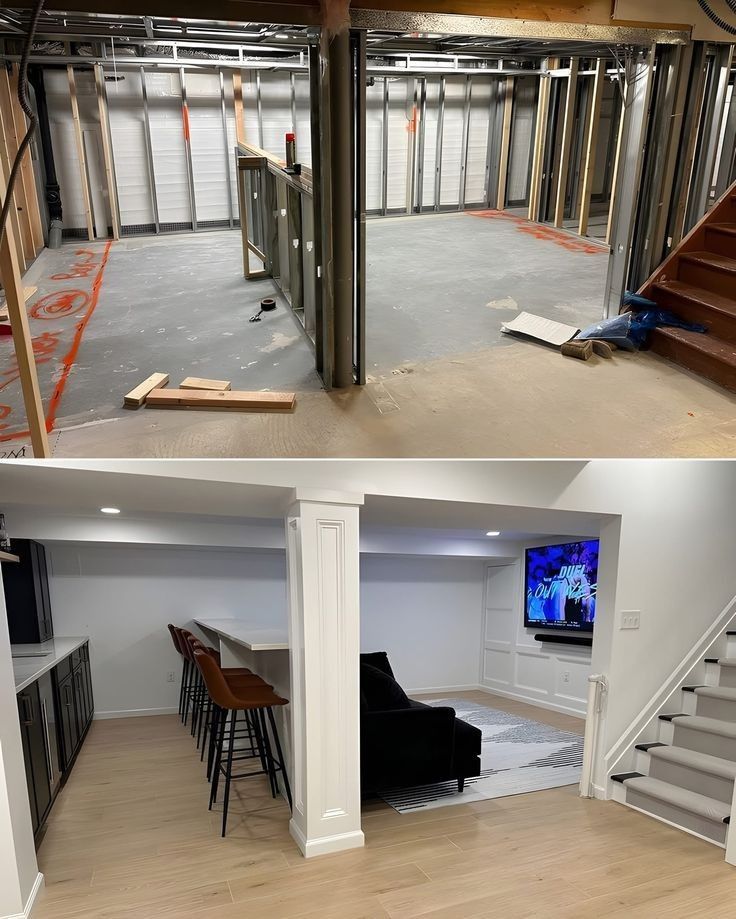
Basements today are often full living spaces with wet bars, built-ins, or even full kitchens. Coordinating the floor with cabinetry, trim, and storage is what makes the space feel like an extension of the main level rather than an afterthought.
If you’re planning a kitchenette, bar, or media built-in downstairs, we can help you design cabinets and flooring together so door styles, finishes, and plank tones all work with the natural light in a below-grade room. Our designers walk you through layouts and storage ideas in the showroom, and you can see how everything comes together in the cabinet planning and design overview before a single box or plank is ordered.
Because our installers handle both surfaces and cabinetry, you don’t have to juggle separate crews or worry about whose responsibility a transition or toe-kick detail is. That matters in tight basement footprints where every inch counts.
Bringing Your Basement Ideas to Life
Choosing basement flooring in a moisture-prone Nebraska climate is about balancing risk, comfort, and style: waterproof LVP for all-around protection, tile in the wettest corners, and softer layers where you want to curl up and relax. When cabinets enter the picture, designing everything as one system makes the space feel finished and intentional.
If you’re ready to turn a cold concrete slab into a comfortable lower level, our team can help you sort through materials, moisture concerns, and layout in one visit. You can start that conversation by requesting a no-pressure design and installation estimate.