
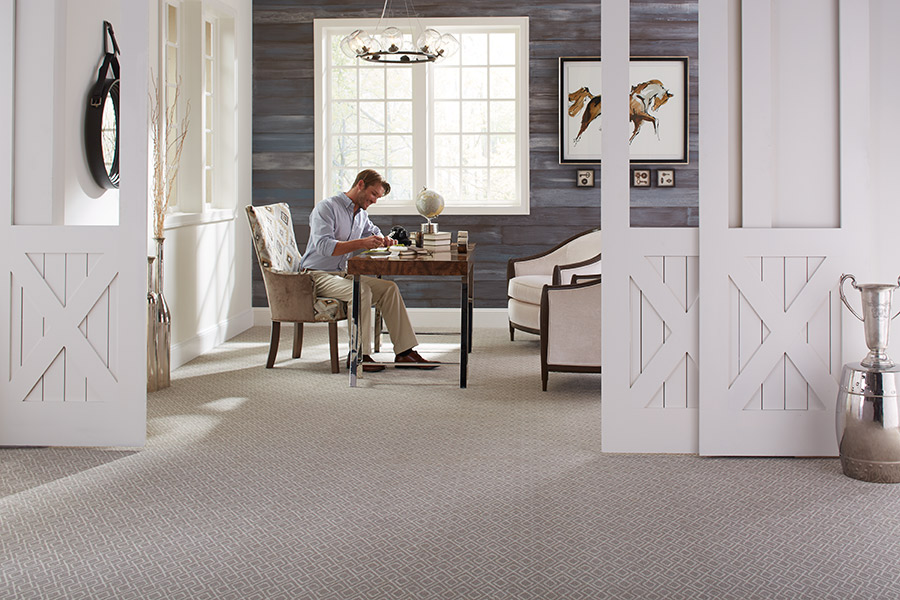
A quiet room changes the way you work. If you’re setting up a home office in Waverly, the floor under your chair matters more than most people expect. Hard footsteps, rolling casters, and room echo can make a space feel busy even when the door is closed. The right surface helps the room sound calmer, feel more comfortable, and hold up to daily use without creating one more distraction.
Start with how sound moves through the room
Noise in a home office usually comes from two places: impact and echo. Impact sound is the click of shoes, chair wheels, or something dropped on the floor. Echo is what happens when hard surfaces bounce sound back into the room. A material that softens one problem may not solve the other, so it helps to think about both before you choose.
Carpet is often the quietest answer because it absorbs sound instead of reflecting it. It also softens footsteps and makes the room feel warmer during Nebraska winters, when hard surfaces can feel especially cold and sharp. If noise reduction is your top priority, it makes sense to compare different soft carpet styles before looking at anything else.
If you want a harder surface, pay attention to the build
Some homeowners want a cleaner, firmer floor under a desk chair. That can work well, but the product structure matters. A floating floor with the right underlayment can reduce noise better than an older hard surface installed directly over the subfloor. In homes that deal with seasonal humidity swings, stable materials also help prevent the little pops and movement sounds that become noticeable in a quiet room.
That is one reason many home offices do well with luxury vinyl floors. They are typically quieter underfoot than traditional hard surfaces, and many products feel less sharp acoustically than tile or solid wood. They also make sense for main-floor workspaces near entry doors, where snow, salt, and wet shoes can show up a few months out of the year.
Laminate can also be worth a look if you want a wood look with a firm feel. The key is not to treat every product the same. Thickness, core quality, and underlayment all affect the sound in the room. You can see a range of laminate options and compare what feels best for your work style and the rest of your home.
Think beyond the office by itself
A study should not feel disconnected from the rooms around it. If your office sits off a hallway or near a kitchen, the best flooring choice often balances quiet performance with visual continuity. That is where working with one team for both surfaces and storage can simplify the process. A home office might need a calmer floor, but it may also need better built-ins, concealed printer storage, or a more organized background for video calls.
When readers are also planning cabinetry, we often suggest looking at cabinet styles and finishes early in the process. Seeing door profiles, colors, and hardware choices alongside flooring helps the whole room feel intentional instead of pieced together later.
Comfort matters just as much as noise
A quieter room should also be easier to live in every day. If you spend long hours at a desk, the feel underfoot matters. Carpet is forgiving, while resilient flooring can be paired with a chair mat or area rug to reduce fatigue and cut down on wheel noise. The best choice depends on how you use the room, how often you clean it, and whether the office doubles as a guest room, study area, or hobby space.
Because we handle design, product selection, and installation under one roof, our installation services help tie those details together from the start. That means you can think through sound, maintenance, and room-to-room flow before the first plank or broadloom goes down.
A quiet office is not only about reducing noise. It is about building a room that helps you focus and feels good to use through every Nebraska season. If you want help comparing materials for your space, you can start with a free in-home estimate.